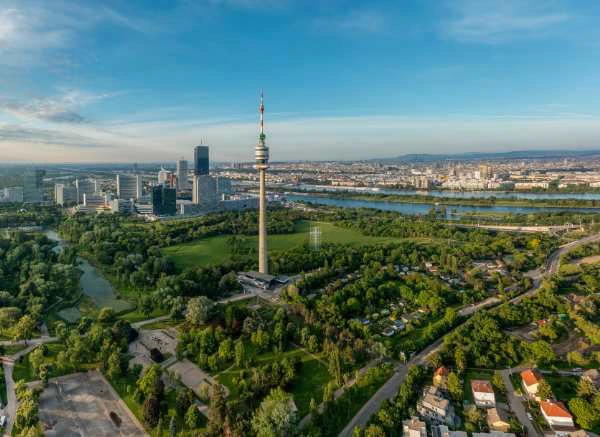
Fear of Heights Workshop at the Danube Tower Vienna
April 21, 2026: The fear of heights workshop at the Danube Tower Vienna is designed for people with mild to moderate fear of heights who would like to train their confidence in dealing with height. Developed together with the Psychological Centre Phobius, the workshop combines psychological background knowledge, strategies for anxiety regulation and practical exercises at real height in Austria’s tallest structure.
Study: Fear of Heights Is Widespread in Austria
A nationwide study commissioned by the Danube Tower shows how common discomfort with heights is in Austria. 66% of respondents feel uncomfortable at great heights: 22% strongly and 44% moderately. Overall, 4 out of 10 people describe this feeling as fear of heights. More than every second person has already avoided an activity because it involved height.
Glass platforms and skywalks, ladders or working at height, as well as open viewing platforms are perceived as particularly challenging. Common physical reactions include the need to hold on, insecurity when walking, a racing heart, weak knees and feelings of panic.
.
Overcoming Fear of Heights: Training at Real Height
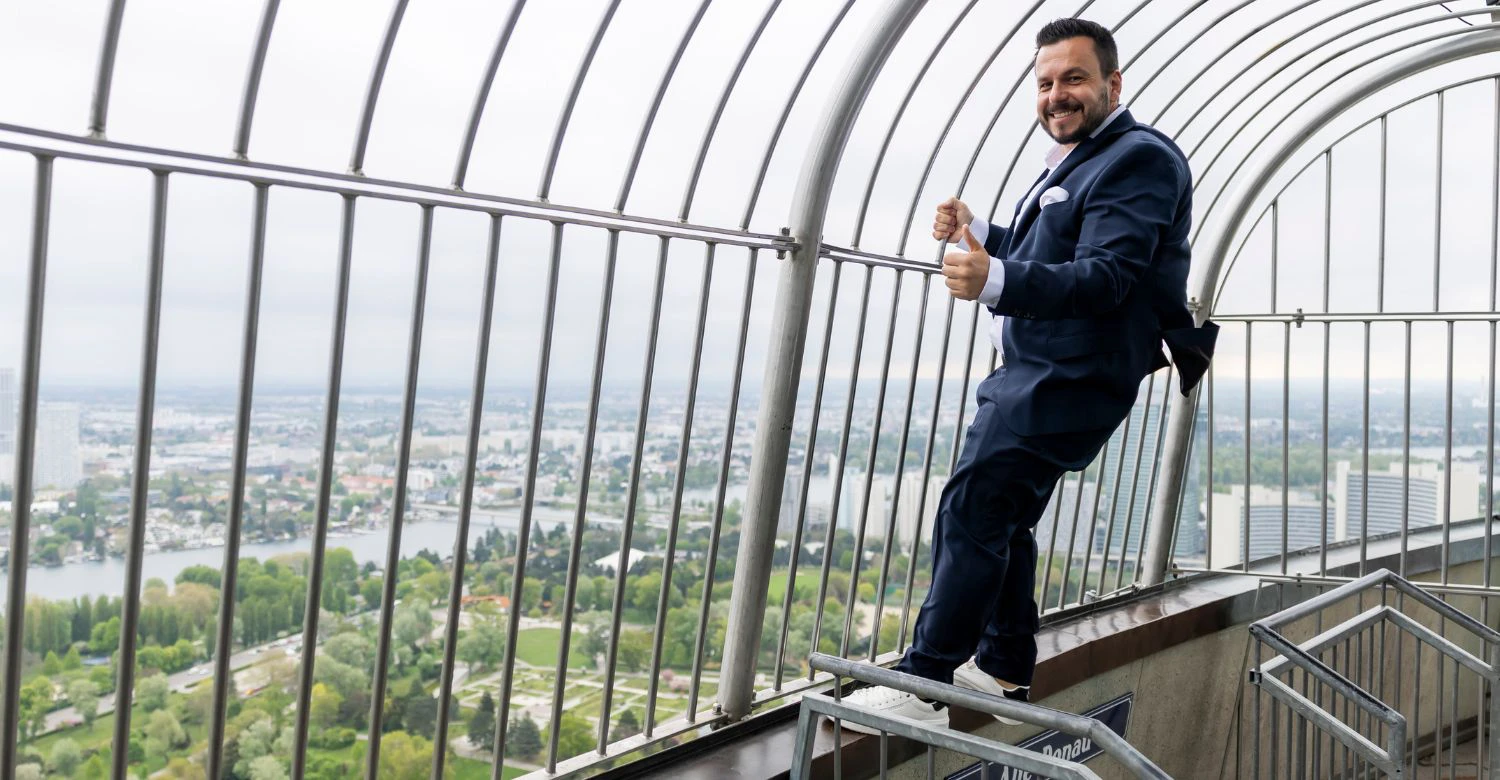
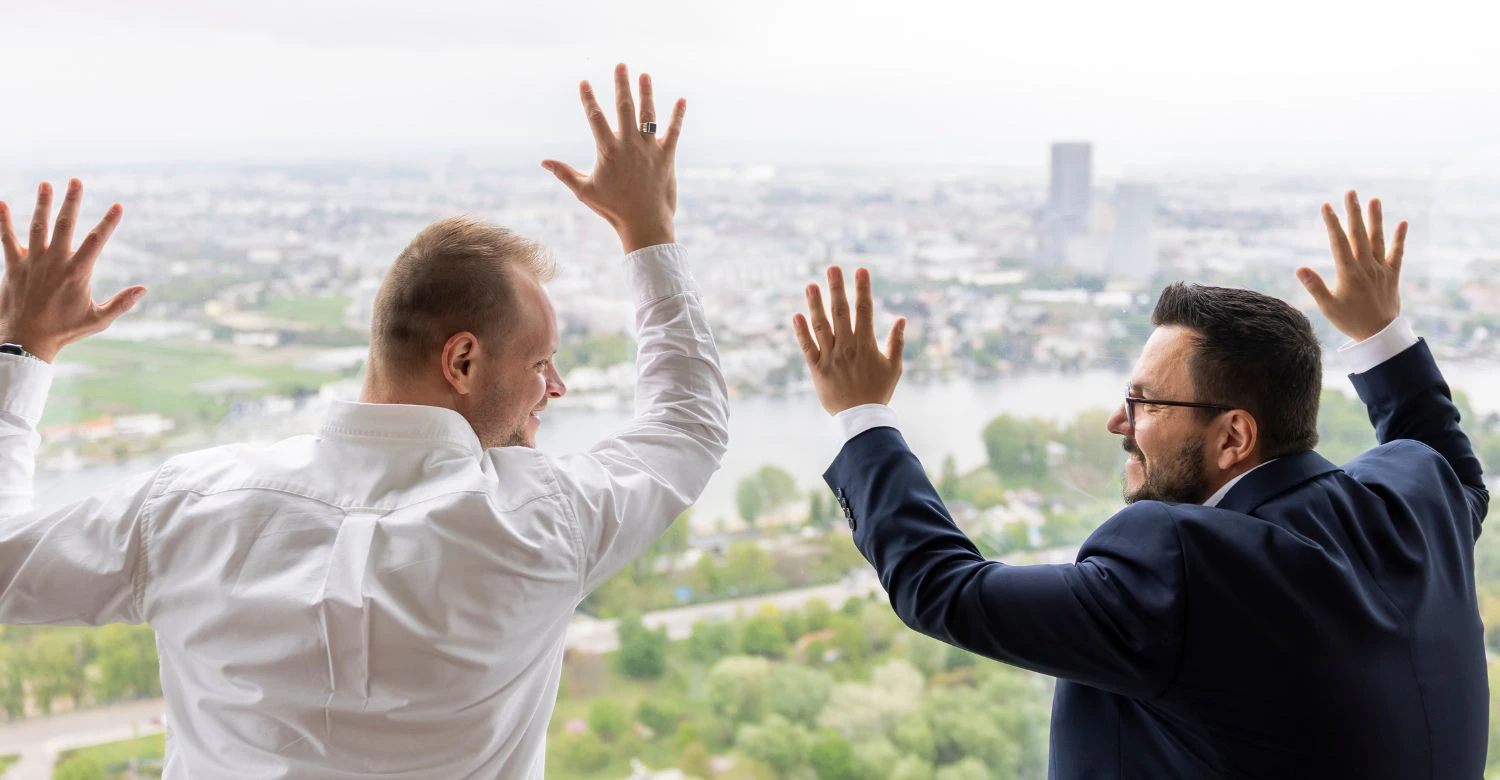
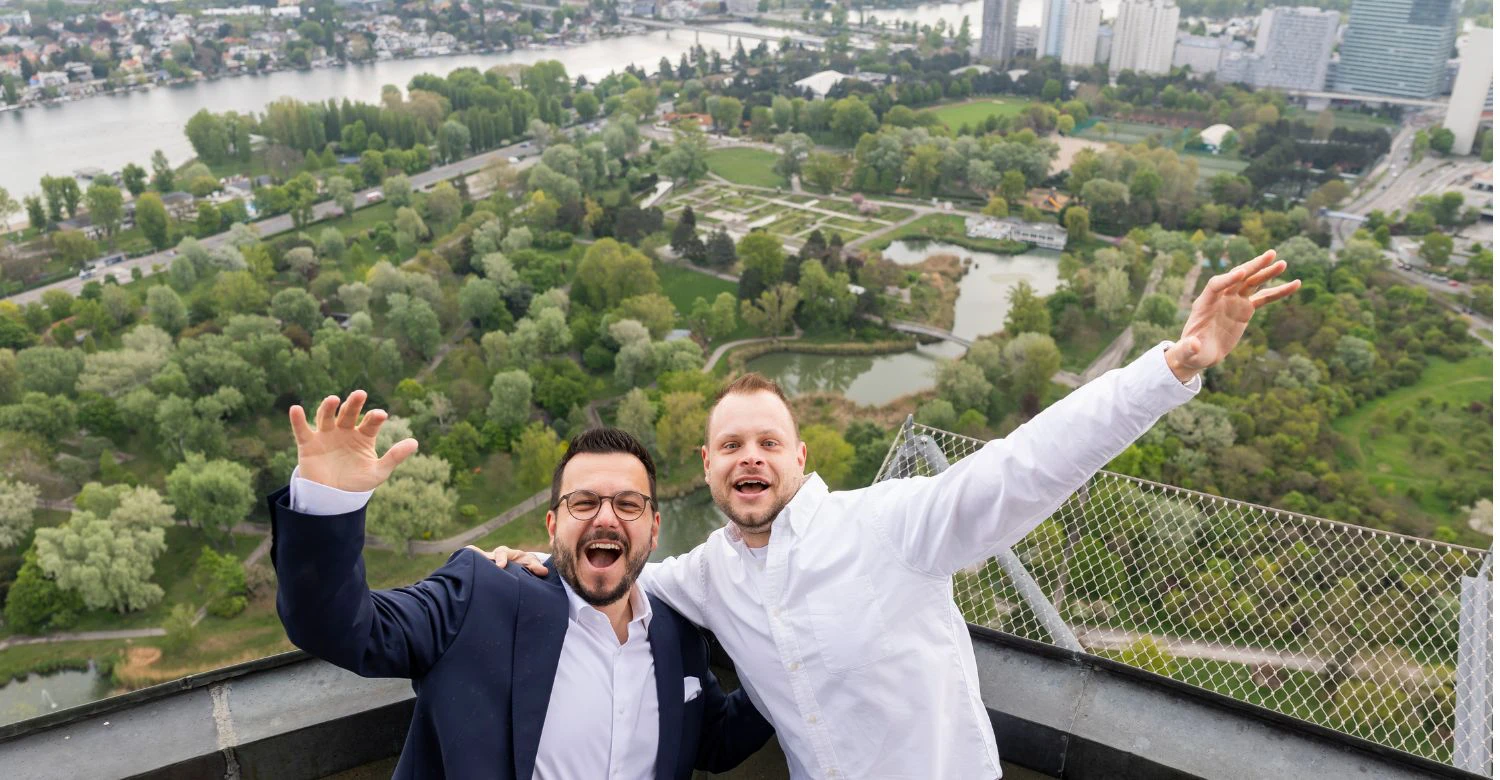
The Danube Tower offers a unique setting for exercises with real height exposure. After a theory session at the foot of the tower, participants complete practical exercises in pairs – including on the stairs with a view, on the indoor terrace, on the outdoor viewing terrace and in Turm Café. Psychologists are available throughout the workshop as contact persons.
Workshop Schedule
Theory Session in the Foyer
At the beginning, participants receive an approximately one-hour introduction to the development and mechanisms of fear of heights. Physical and psychological anxiety reactions are explained, and strategies for regulation are introduced – including breathing techniques, relaxation exercises and helpful thought patterns.
Practical Exercises at the Tower
The practical part then takes place directly at the Danube Tower. In pairs, participants complete several gradually increasing difficulty levels and reflect on their experiences. The exercises take place at real height and help participants build confidence step by step.
Danube Tower Slide as a Courage Challenge
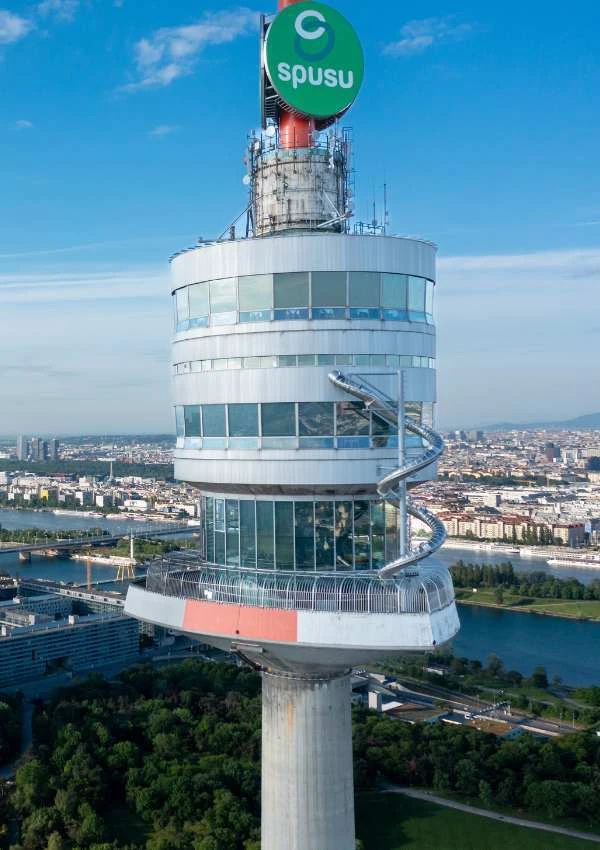
At the end, participants have the opportunity to try the Danube Tower Slide. Europe’s highest slide starts at 165 m and runs along the outside of the tower down to the viewing level at 150 m.
Dates, Duration and Price
The fear of heights workshops take place in 2026 on selected dates from 09:00 to 12:00. The price is €199 per person, including admission ticket, slide ticket and 3 hours of therapeutic support. The number of participants is limited to a minimum of 4 and a maximum of 14 people.
Planned dates 2026:
18 May, 9 and 20 June, 14 and 29 September, 12 and 27 October, 9 and 24 November 2026.
Who Is the Workshop Suitable For?
The workshop is suitable for people with mild to moderate fear of heights who would like to train their confidence in dealing with height. The programme is designed as self-responsible training in a group setting and does not constitute clinical psychological treatment or psychotherapy.
Tips for Regulating Fear of Heights
Control Your Breathing
Calm and deep breathing can help reduce physical tension.
Establish Contact with the Ground
Consciously placing your feet on the floor and noticing that contact can create a sense of safety.
Relax Your Muscles
Gentle movement or stretching exercises can help release physical tension.
Reality Check in Your Mind
Helpful thoughts such as “I am safe” can support a more realistic assessment of the situation.
Recognise Safety Behaviour
Consciously noticing avoidance or withdrawal impulses and gradually regulating them is an important part of the training.
Workshop with the Psychological Centre Phobius
The fear of heights workshop was developed together with the Psychological Centre Phobius. Phobius specialises in anxiety and panic disorders, specific phobias and obsessive-compulsive disorders, working with evidence-based concepts of cognitive behavioural therapy as well as modern methods such as virtual reality and biofeedback.
Medienberichte über den Höhenangst-Workshop
Der Höhenangst-Workshop im Donauturm Wien wurde von zahlreichen österreichischen Medien begleitet. Hier finden Sie ausgewählte Beiträge und Videos zum Event.